A ceiling is not a quote · Boca Raton, FL
Does the 30 Percent Rule Apply to a Kitchen in Boca Raton?
Does the 30 percent rule apply to a kitchen in Boca Raton the way people hope it does? No. It is a ceiling on what you put back into a property, not a price for the work. The rule says renovations should stay under 30 percent of a home's market value, and that figure is taken from the house. A quote is taken from the room: the length of the cabinet run, and whether anything changes position. Use the rule to set your limit. It cannot tell you what the kitchen costs.
- What the rule measures
- The house
- · 30 percent of its market value
- What the quote measures
- The kitchen
- · the run of cabinetry, and what moves

- Licensed & insured: CGC1524886
- 350+ projects completed
- 2-year labor warranty
- Answered 7 AM–10 PM, 7 days
The Rule Prices the House, Not the Room
Used for what it was made for, the rule is sound. It answers how much of an asset you are willing to put back into it before you are spending money the property will not hold. Anyone signing a contract should have a limit like that. It stops being useful the moment it is asked to price a kitchen.
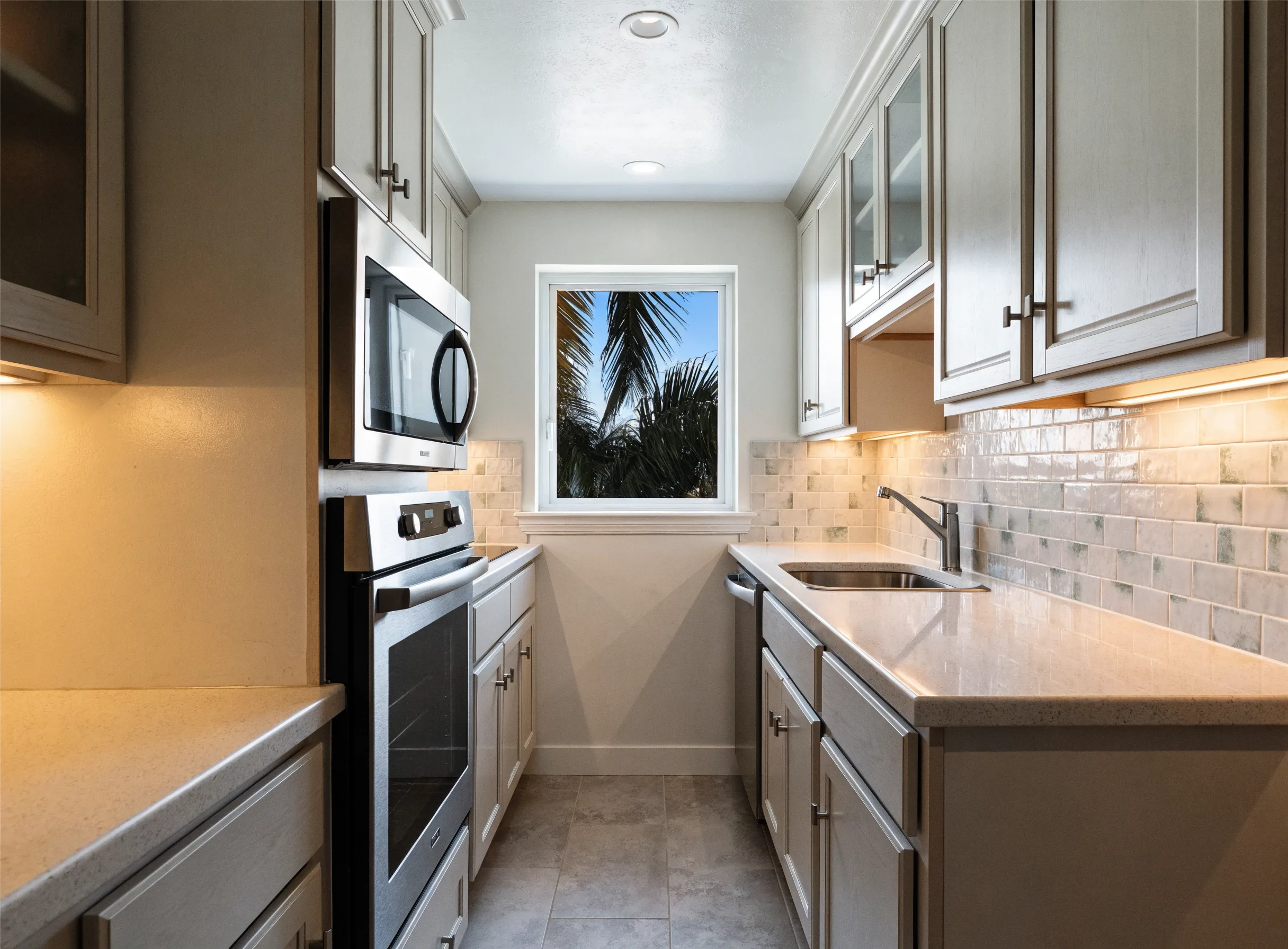
Two houses on the same street can carry the same value and hold kitchens with nothing in common. One is a galley behind a wall, under twenty feet of cabinetry, with the range where it has always been. The other runs forty feet, opens into the living space and is about to lose a wall. The rule hands both owners the same ceiling. A figure that does not move when the work changes is not measuring the work.
It moves for another reason instead. The percentage is pegged to an appraisal, so it drifts with the market while the kitchen sits there unchanged. The same cabinets and the same slab earn a different allowance two years apart, with nothing about the job different on either date.
What a Percentage Cannot See
Every figure a percentage produces is about the finished picture. What decides a kitchen quote is what is already in the house, and almost none of it is visible with the doors shut.
The box behind the door is the first. A sound one carries a new front, new hinges and a stone top for another twenty years. One that has taken on water under the sink carries nothing, and no door hides it. The panel is the second: what the old kitchen drew and what the new one will draw are rarely the same.
The third is under the floor. Many houses here sit on a concrete slab with the kitchen drain beneath it, so moving a sink means cutting that slab open and looking at a line nobody has seen in decades. Whether that run gets reconnected or replaced is worth more than every finish choice put together. Cutting carries its own requirements: concrete and engineered stone cut dry release respirable crystalline silica, and the crew works to OSHA's construction standard for silica, which sets out the control required for each tool.
None of the three appear on an appraisal, which is the only document the rule reads.

A Budget Has a Calendar, and a Percentage Has None
A total is half a budget. The other half is when it leaves your account.
Money in a kitchen moves in stages tied to work: what is paid to begin, what is paid when cabinetry is ordered, what is paid on delivery, what is held until the last item is finished. One figure against one limit hides all of it, and the stage that catches people out is the first.
Florida attaches a clock to that first payment. A contractor who takes more than 10 percent of the contract price up front has to apply for the permits the work needs within 30 days of that payment, and start the work within 90 days of the permits being issued, unless there is just cause or the homeowner has agreed in writing to a longer period. The deposit is not a placeholder. It starts something that has to become visible.
So a budget answers more than whether the total fits under a limit. It answers whether the stages fit the year you are planning. A percentage hands you one number and no dates.