Pantry design · Boca Raton, FL
Does a Kitchen Pantry Need Ventilation in Boca Raton?
Does a kitchen pantry need ventilation in Boca Raton? Not the kind most guides mean. Outside air is the problem here, so a vent to the garage or the yard makes a pantry worse. What a pantry needs is to sit inside the cooled part of the house, with a path for that cooled air to reach it and leave again. Dry food keeps at the humidity of the room around it, not at the speed of the air.
- Aim for
- 30–50%
- · Indoor relative humidity
- Stay under
- 60%
- · Where the mold risk starts
- Licensed & insured: CGC1524886
- 350+ projects completed
- 2-year labor warranty
- Answered 7 AM–10 PM, 7 days
Why Outside Air Makes It Worse
The advice to ventilate a pantry comes from places where outdoor air is drier than indoor air. On this coast that is backwards for most of the year. A louver through an exterior wall, or a grille into the garage, connects the food shelf to air warmer and wetter than the kitchen, and the shelf is where that moisture stops.
What keeps a pantry dry is not airflow but the relative humidity of the room. The EPA tells homeowners to keep indoor humidity below 60 percent, and ideally between 30 and 50 percent. Above that band, the shelf, the boxes and the wall behind them begin holding water they were not holding before.
Which is why a pantry fails in the mild months rather than in August. Nobody runs the air conditioning much, the house feels fine, and the room drifts into the sixties with nothing to see. A closed door holds that air in place.
What a Closed Pantry Actually Needs
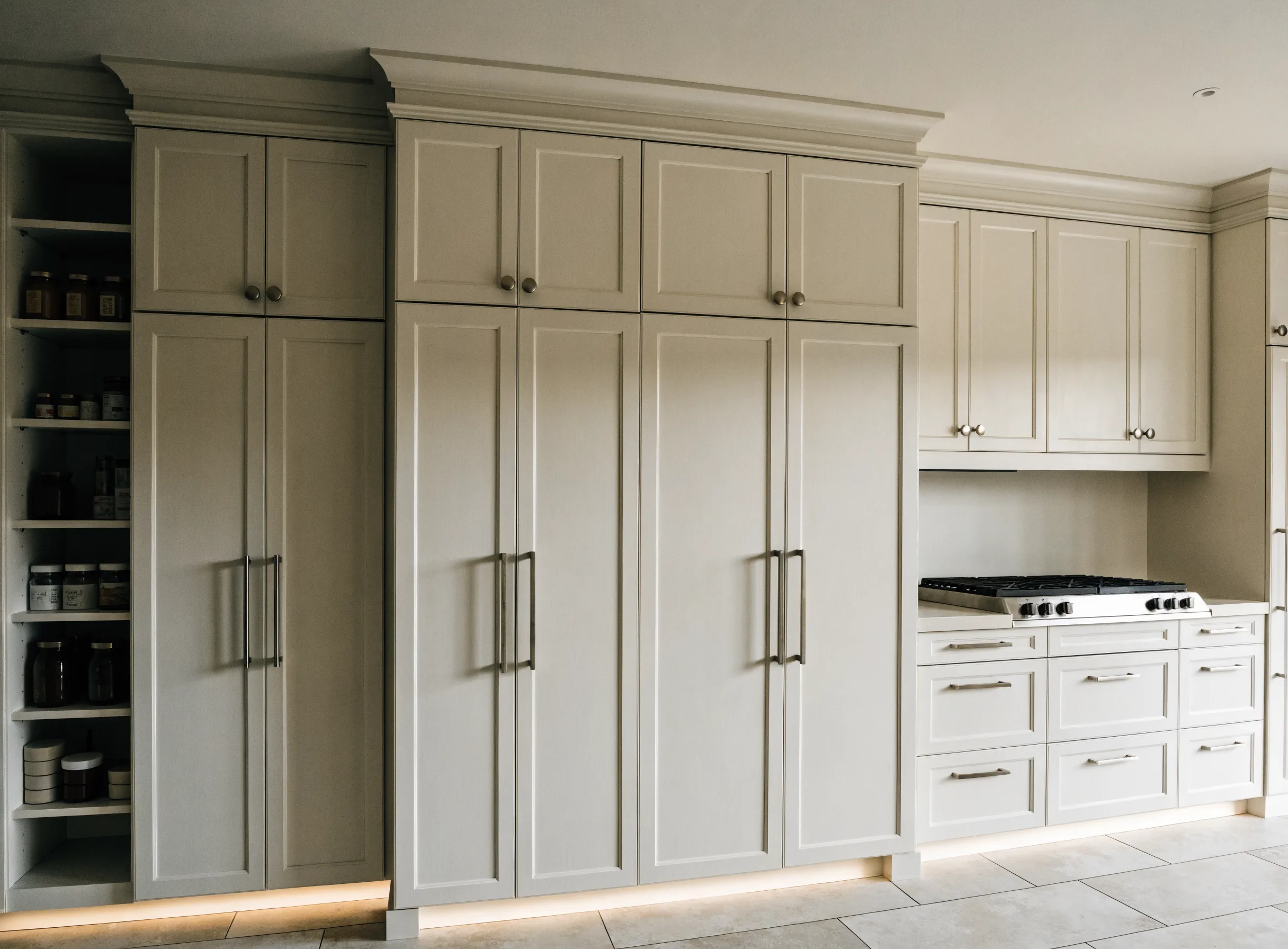
A pantry with a door is a small closed room, and closed rooms have a known problem in a house with ducted air conditioning. Cooled air gets pushed in, and with no way back to the return it stops moving, so the room drifts toward whatever the surfaces around it are doing. The Department of Energy's building guide gives the fix for any room like this: a door undercut, a transfer grille or a jump duct gives air from a closed room a path back to the central return. That guide is written for bedrooms, but the mechanism is the same one.
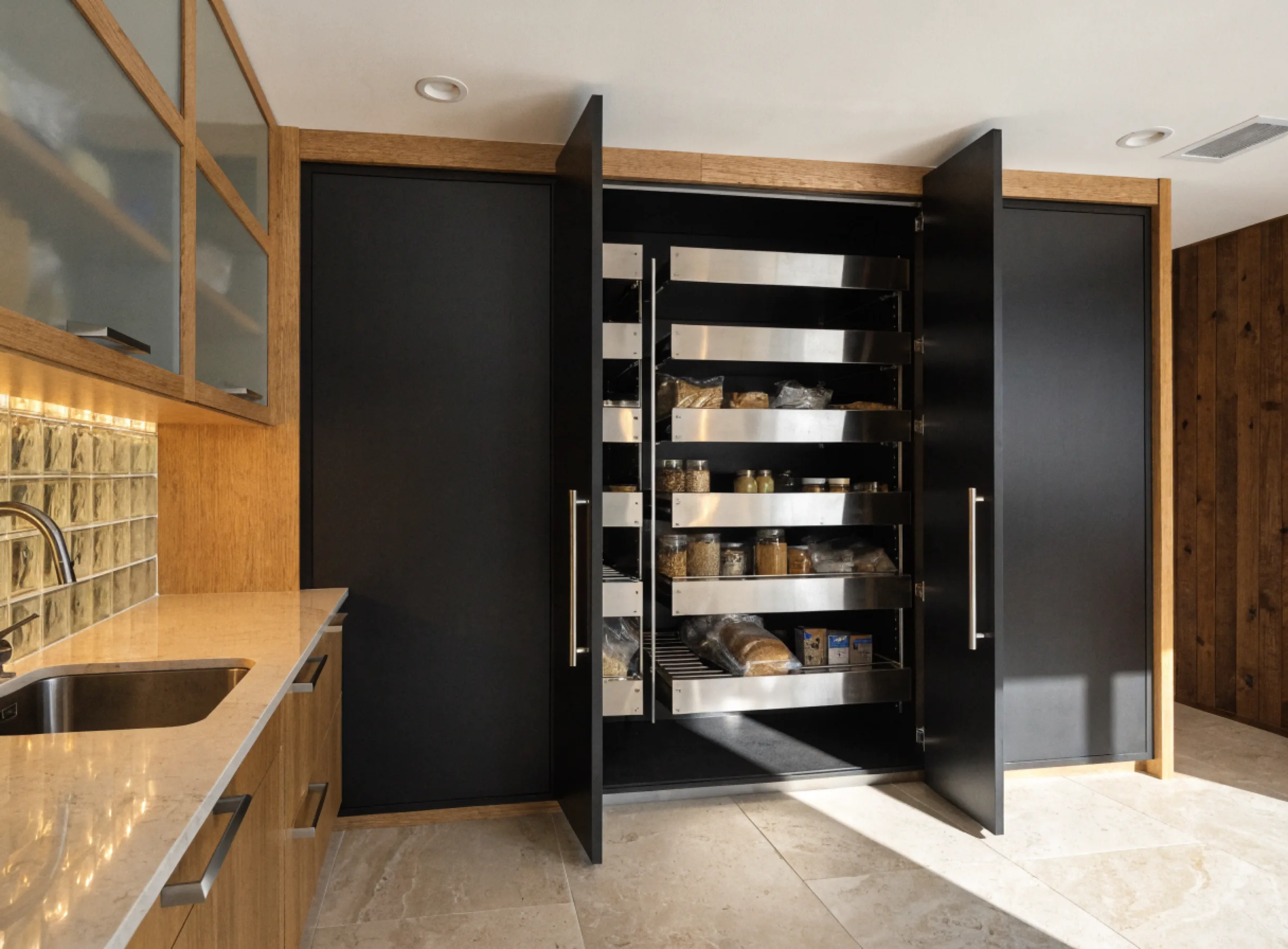
So the design question is not whether to vent the pantry outward. It is whether the cooled air that reaches it can get out again. On a reach in, that is the gap under the door, kept rather than trimmed away by a new floor. On a walk in with its own supply register, it is a grille set high in the wall that opens into the kitchen.
The Containers Carry the Rest
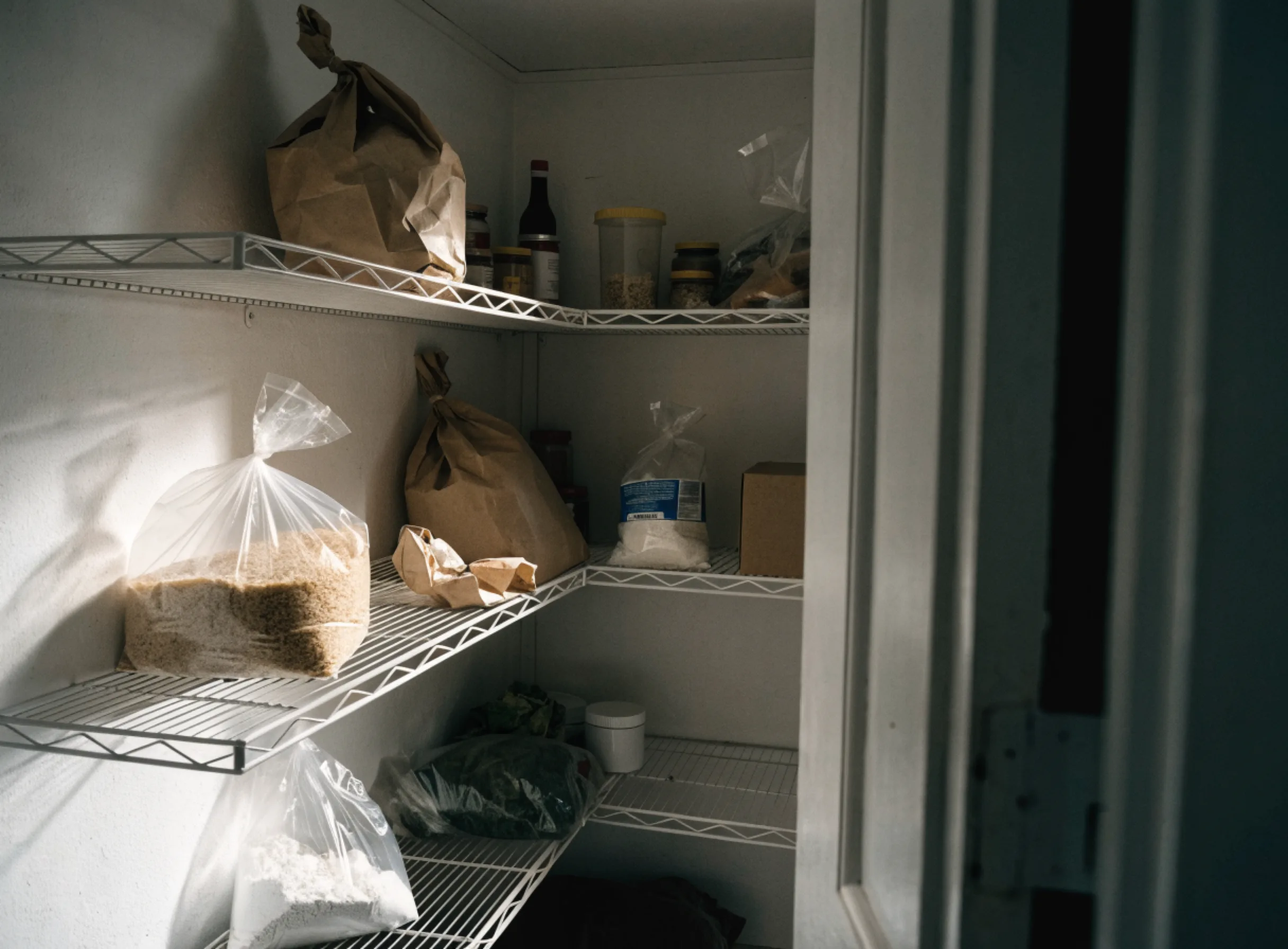
A pantry held at 45 percent still does nothing for an open box of flour, and in this climate what finds that box first is usually alive rather than mold. The University of Florida extension service treats stored food pests as an ordinary household matter here, and its advice is about packaging rather than air: keep all containers tightly closed, put susceptible items in tight containers or screw top jars, and do not overstock shelves with products that will not be used in a short time.
The last part is the one people skip: a pantry loaded with four months of bulk shopping is one where something sits long enough to be found. The same page adds what matters while the cabinet is being built, which is that these insects hide in cracks and corners, so the joints are worth sealing.
None of this argues for a smaller pantry. It argues for shelves that get emptied.