What gets reviewed · Boca Raton, FL
What Kitchen Work Needs a Permit in Boca Raton?
What kitchen work needs a permit in Boca Raton is settled by the systems you touch, not by how much the room changes. New doors, new boxes where the old ones stood and a countertop on the same run are usually outside review. Moving the sink drain, adding a circuit or taking out part of a wall is inside it. Then there is the half nobody asks about: which office reviews it, and whose name signs.
- Offices one address can fall under
- 3
- · City, Park District or County
- Name on the application
- CGC1524886
- · our license, not your signature
- Licensed & insured: CGC1524886
- 350+ projects completed
- 2-year labor warranty
- Answered 7 AM–10 PM, 7 days
The Line Runs Through the Systems, Not the Room
You can change everything you see in a kitchen and cross no line at all. Doors, drawer fronts and hinges on boxes that stay put. A countertop templated onto the cabinets you already have. Flooring, paint, a backsplash.
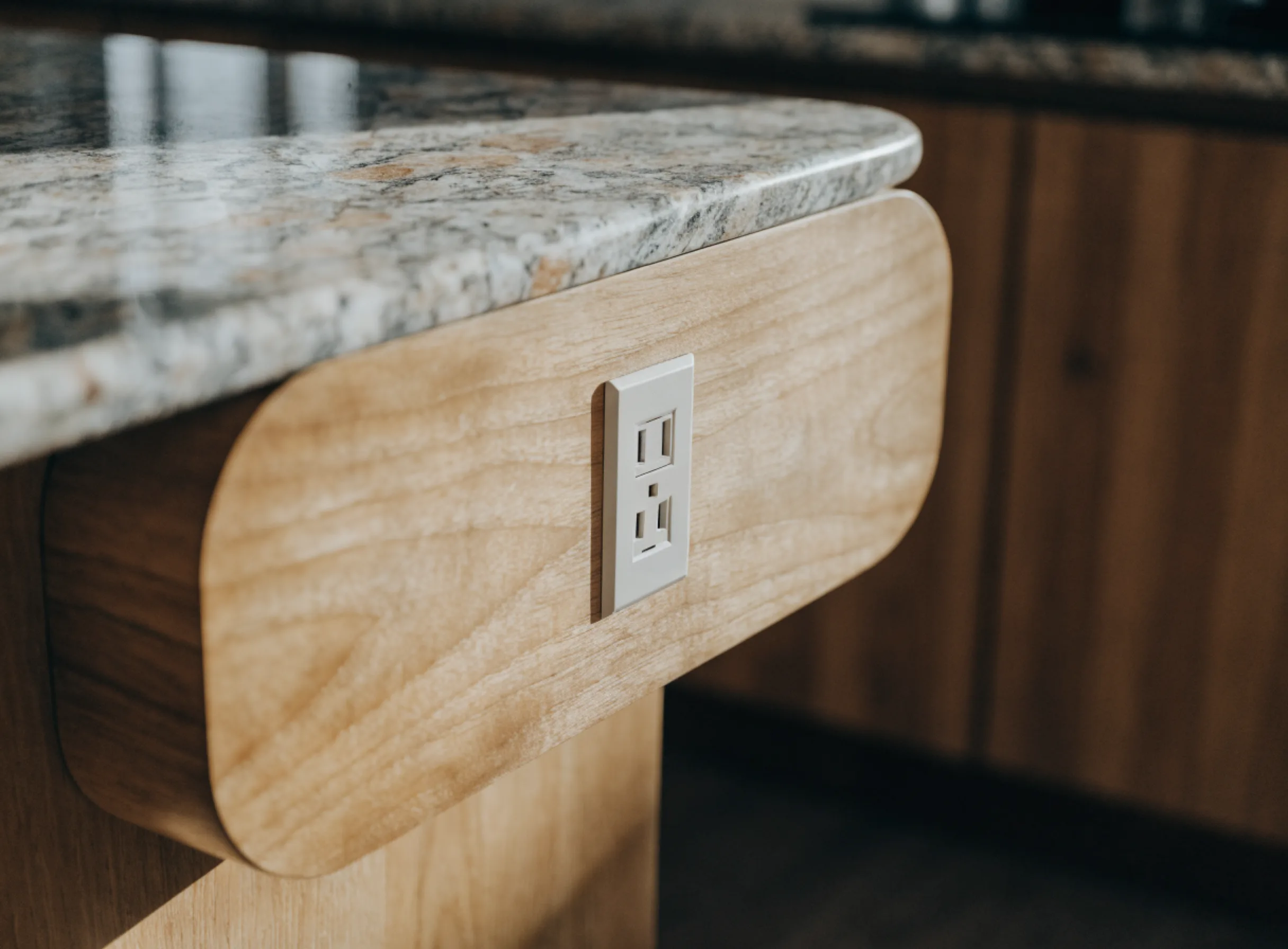
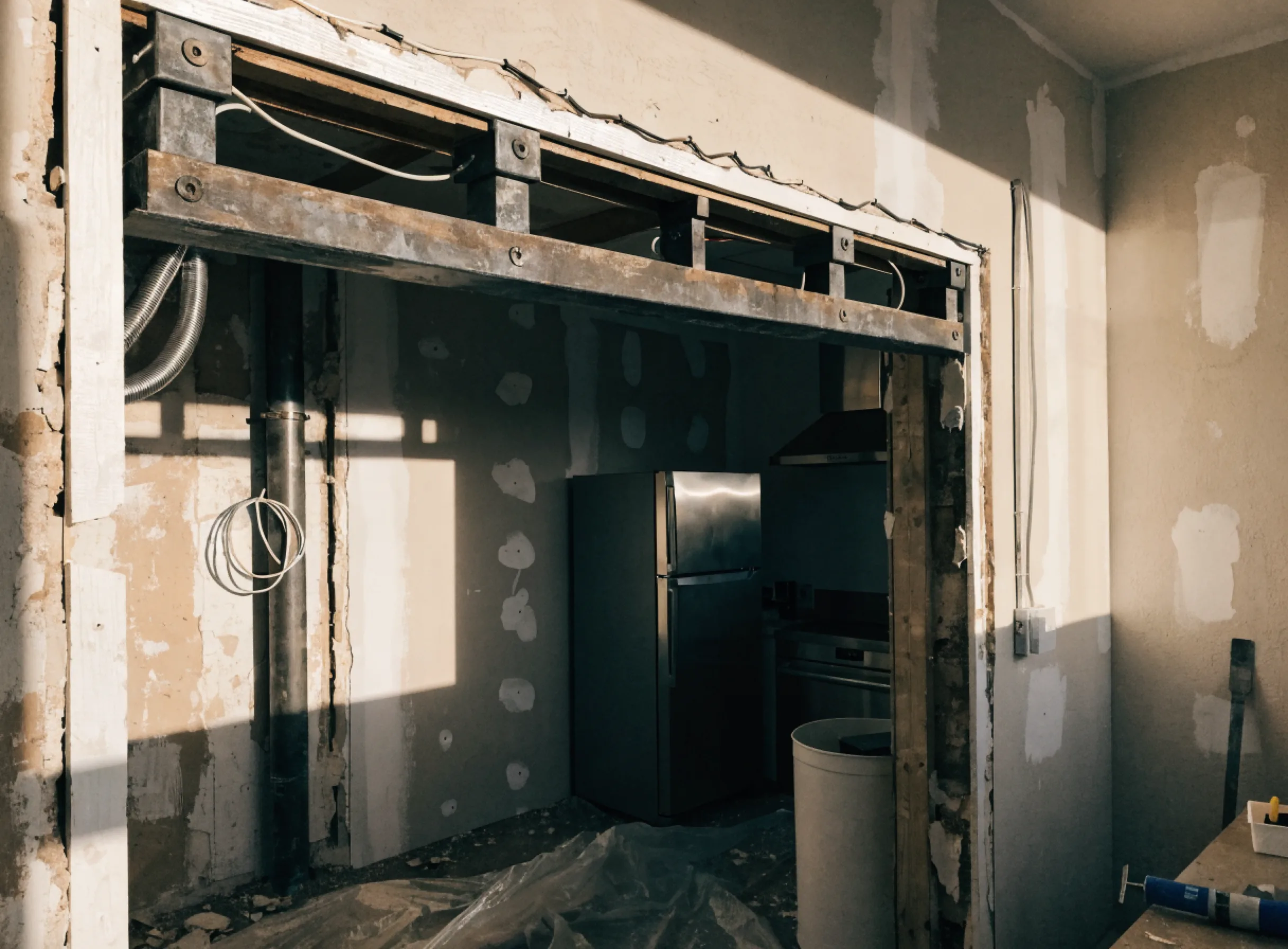
Then there is work that changes the room far less and gets reviewed anyway. Relocating the sink moves a drain. Bringing power to an island, adding a circuit for a second oven, or growing a panel that cannot carry what you chose is electrical work. Removing part of a wall is structural, and that is the clearest case on the list.
That middle is where people get caught, because it arrives through a purchase rather than a plan. You choose a range that needs a circuit the kitchen does not have, or an island that needs power brought across the floor. Neither reads like a permit decision in a showroom.
We publish no permit fee and no review time anywhere on this site, and that is deliberate. What is required comes out of the real scope and the jurisdiction of your property, and it is priced in the written estimate before you approve it.
Whose Name Goes on the Application
A permit has a responsible party, and that is a person, not a project. When a licensed contractor does the work, it is pulled in the company's name and the company carries it. There is a second route, and Florida spells it out. The owner-builder exemption lets you act as your own contractor on your own one or two family home, and to use it you have to personally appear and sign the building permit application.
What that signature means is in the statute rather than left to interpretation. You become the responsible party of record. You supervise the work on site yourself. And the disclosure the office hands you says, in its own words, that it is a frequent practice of unlicensed persons to have the property owner obtain an owner-builder permit, that you may be held liable for injuries to anyone working on your property, and that your homeowner's insurance may not cover them. So on plumbing or wiring, "we can do this without pulling anything" and "it is quicker if you pull it yourself" are one offer in two forms.
Ours goes in the company's name. The work is contracted by Gaven Constructions, Certified General Contractor CGC1524886, licensed, insured and bonded, and the number is searchable in the Florida DBPR records. Run that check on anyone who quotes you, including us.
What Skipped Work Leaves Behind
Nothing happens during the job. That is what makes this easy to skip and expensive to find.
What unreviewed work leaves is a gap between the house and its file, and the file is public. For a property in unincorporated Palm Beach County it sits with the County's permit center. Whoever asks later reads the file instead of asking you: the next contractor applying for anything, a buyer's inspector, an appraiser, an insurer after a loss.
There is a second version that catches more people, because at the time it looked careful. A permit was applied for, the work went ahead, and nobody called for the final inspection. That permit is still open, and it does not close when the crew does.
Neither is cheap to settle once the kitchen is finished, because inspecting anything means reaching what is now behind cabinets and drywall.